HEALTHCARE
Care goes to the patient.
Your connectivity goes with it.
Mobile healthcare runs on devices that leave the building every day. Datablaze delivers managed wireless for healthcare: cellular connectivity, device management, and cost control for every tablet, monitor, and hotspot in the field.
Talk to Our TeamCare left the building. The devices went with it.
Home health, hospice, mobile clinics, remote patient monitoring. The point of care moved into the home, and the devices that make that care possible now travel with the clinician. EHR access, point-of-care documentation, EVV check-ins, telehealth visits: all of it depends on a connection that works at every address on the route. A single agency can have hundreds of connected devices spread across a region on any given day. Keeping them online, secure, and under control is its own operation. That is the part Datablaze runs for you.
What gets harder when the network leaves the building.
Dead zones in the middle of a visit.
Urban neighborhoods in the morning, rural towns by afternoon. A device locked to one carrier goes dark somewhere along that route, and EHR documentation stops with it. DB1 connects across carriers, so the device finds a working network instead of waiting for one.
Hundreds of devices. No single view.
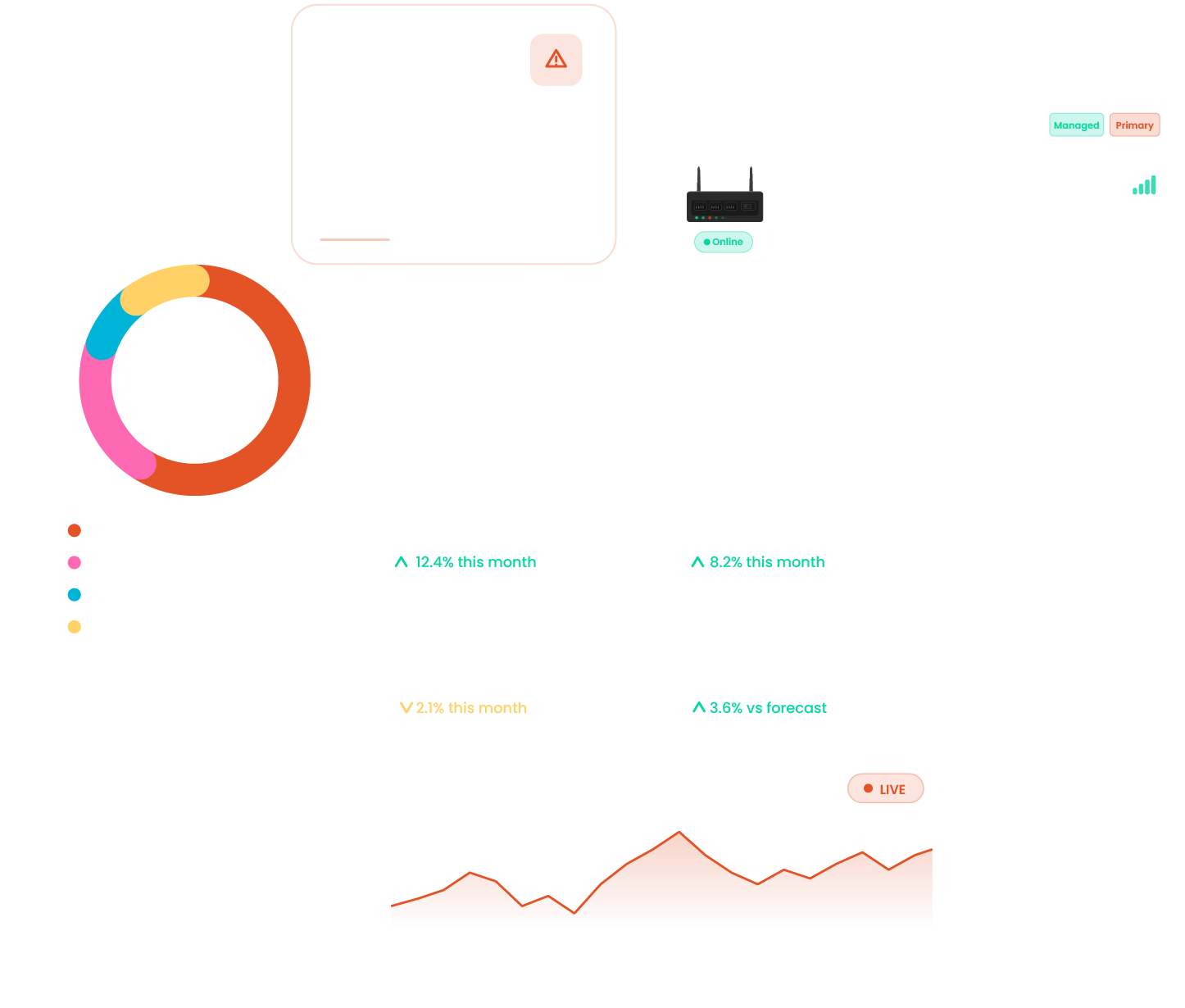
Tablets, monitors, and hotspots spread across carriers and regions are impossible to track one portal at a time. VOYAGER puts every SIM and device on one screen, with billing consolidated instead of scattered across carrier invoices.
Wireless costs that creep without warning.
Overages on a healthcare fleet this size add up fast and show up late. VOYAGER flags usage before it crosses the line, not after the bill arrives.
Sensitive data on the move.
Patient information travels on every connected device in the field. Private networks and network-level controls keep that traffic locked down.
VOYAGER BY DATABLAZE
Healthcare IoT connectivity management, on one screen.
VOYAGER is the management layer for everything your clinicians carry. Every SIM, every device, every data plan, every location, in one dashboard. Activate a new tablet, suspend a lost one, watch usage by device, and catch a problem before it reaches the point of care. The bigger the deployment, the more that single view is worth.
Get in Contact to Learn More
DB1 SIM
One multi-carrier SIM built for healthcare in the field.
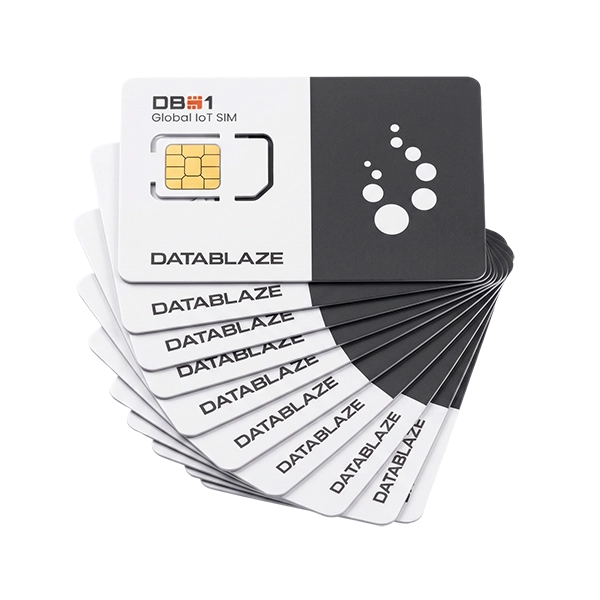
Home care happens wherever the patient lives, including the places a single carrier does not reach. The DB1 is a multi-carrier SIM for healthcare deployments, built on eUICC and multi-IMSI technology. One SIM carries more than one carrier identity, so a device selects the best available network on its own and stays connected through the rural stretches where single-carrier coverage gives out.
No swapping SIMs, no truck roll, no device going dark in a patient's driveway. It deploys as a physical SIM or an eSIM, and it is managed alongside everything else in VOYAGER.
DB1 keeps the device connected. VOYAGER gives you control over that connection.
Get a QuoteWhen a visit can't wait, the connection can't drop.
At the point of care, connectivity is a clinical requirement. Vitals that don't upload, EHR records that don't sync, EVV check-ins that don't register, telehealth visits that freeze mid-consult. That is not a tech issue. That is a patient care issue. Datablaze builds for uptime: multi-carrier cellular connectivity through the DB1, automatic cellular failover for mobile clinics and fixed sites, and Starlink satellite for the rural homes where cellular runs thin. The device finds a way to stay online so the clinician can focus on the patient, not the signal bars.
Patient data, locked down from the device out.
Every connected device in the field is a path to sensitive information, which makes the network itself part of your security posture and your HIPAA obligations. Datablaze gives you private LTE and 5G networks, network-level traffic controls, and full visibility into which devices are connected and what they are doing. You decide what each device can reach, and you see it the moment something looks off. Security and visibility that support the safeguards your compliance program requires.
USE CASES
Built for how care actually gets delivered.
Home Health & Skilled Nursing
Clinicians dispatched daily with connected tablets for EHR access and visit documentation.
Hospice & Palliative Care
Dependable connectivity in the most sensitive settings.
Mobile Clinics & Health Units.
Primary connectivity plus cellular failover that travels with the unit.
Remote Patient Monitoring
Hundreds of in-home devices reporting back without interruption.
Telehealth Carts & Kits
Video that holds up wherever the field clinician sets up.
Frequently Asked Questions
Put every device in the field on one platform.
Tell us how your care teams work and we'll map the connectivity, management, and security to match.
Get in Contact to Learn More